Salivary gland adenocarcinoma in an orange-spined hairy dwarf porcupine (Sphiggurus villosus)
DOI:
https://doi.org/10.24070/bjvp.1983-0246.v10i1p27-31Keywords:
rodentia, wildlife, neoplasia, surgery, clinical-histological diagnosticAbstract
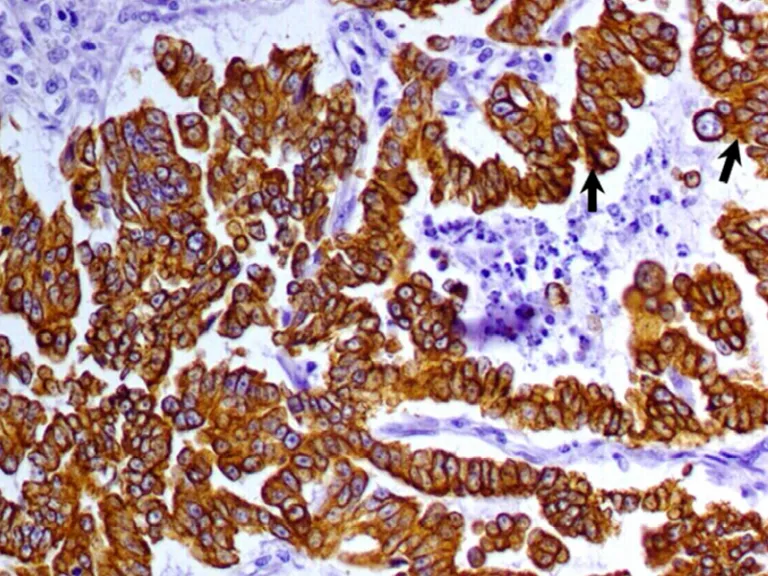
The goal of this case report is to describe a salivary gland adenocarcinoma in a free ranging Sphiggurus villosus. A orange-spined hairy dwarf porcupine (S. villosus) was referred to the Wildlife Medicine Service at the Veterinarian Hospital of the Universidade Estadual Paulista (Jaboticabal, São Paulo, Brazil), with a mass in the lateral region of the face. Radiographs highlighted swelling in the soft tissues, measuring 7 cm x 9 cm, without bone involvement. The physical examination and radiographs were consistent with a neoplastic process. The animal was submitted to surgical excision of the mass. Microscopically, the tumor was composed of a highly cellular proliferation of epithelial cells arranged predominantly in tubular pattern, associated with moderated fibrous stroma, poorly demarcated, non-encapsulated and with infiltrative growth. These findings were consistent with salivary gland adenocarcinoma. To the authors' knowledge, this is the first report of a salivary gland adenocarcinoma in a wild life orange-spined hairy dwarf porcupine.