
In vitro and in vivo antiparasitic action of essential oils of Lippia spp. in Koi Carp (Cyprinus carpio) fed supplemented diets

Authors

  • Elenice M. Brasil AQUOS – Aquatic Organisms Health Laboratory, Department of Aquaculture, School of Agricultural Sciences (CCA), Federal University of Santa Catarina (UFSC) Author
  • Aline B. Figueredo Author
  • Lucas Cardoso AQUOS – Aquatic Organisms Health Laboratory, Department of Aquaculture, School of Agricultural Sciences (CCA), Federal University of Santa Catarina (UFSC), Author
  • Marcio Q. de C. Santos Federal Institute of Education, Science and Technology of Amazonas (IFAM), Author
  • Elisabeth de A. Bertaglia AQUOS – Aquatic Organisms Health Laboratory, Department of Aquaculture, School of Agricultural Sciences (CCA), Federal University of Santa Catarina (UFSC) Author
  • William E. Furtado AQUOS – Aquatic Organisms Health Laboratory, Department of Aquaculture, School of Agricultural Sciences (CCA), Federal University of Santa Catarina (UFSC) Author
  • Jeanderson da S. Viana Laboratory of Biology and Cultivation of Freshwater Fish, Federal University of Santa Catarina, Aquaculture Department Author
  • Iracimar B. do Carmo State Department of Education and Quality of Education of Amazonas (SEDUC). Author
  • Francisco C. M. Chaves Embrapa Western Amazonia Author
  • José L. P. Mouriño AQUOS – Aquatic Organisms Health Laboratory, Department of Aquaculture, School of Agricultural Sciences (CCA), Federal University of Santa Catarina (UFSC) Author
  • Maurício L. Martins AQUOS – Aquatic Organisms Health Laboratory, Department of Aquaculture, School of Agricultural Sciences (CCA), Federal University of Santa Catarina (UFSC) Author

DOI:

https://doi.org/10.24070/bjvp.1983-0246.v12i3p88-100

Keywords:

fish farming, phytotherapics, efficacy, ectoparasites

Abstract

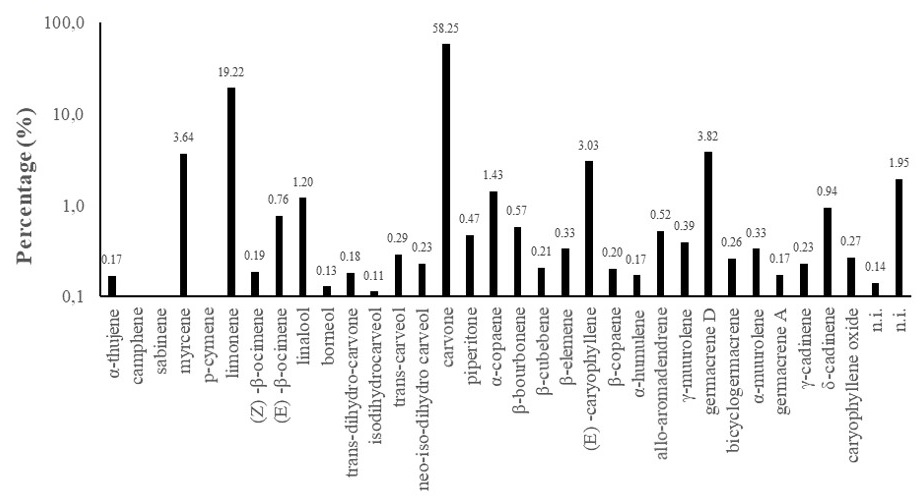
This study evaluated the in vitro antiparasitic activity of the essential oils of Lippia alba, L. origanoides and L. sidoides against monogenean parasites of koi carp Cyprinus carpio and its zootechnical performance in net cages. The oils were obtained from the leaves by hydro distillation, and the chemical composition was evaluated via gas chromatography. In vitro assays were performed with each essential oil separately and combined in binary (1:1) and tertiary (1:1:1) mixtures with the Lippia species at 10, 20, 40, 60, 80 and 100 mg L-1 and two control groups (grain alcohol and tank water). To determine zootechnical performance, L. sidoides oil was added to the feed at 0.00 (control), 0.25, 0.50, 0.75 and 1%, in triplicate and with 20 fish per net cage fed for 60 days. The best results in vitro against monogeneans were observed for L. sidoides (40 mg L-1 in 8 min), followed by L. origanoides (40 mg L-1 in 25 min) and L. alba (40 mg L-1 in 4 h). Reductions in weight gain, protein efficiency rate and specific growth rate were observed in diets containing 0.75% of L. sidoides oil in comparison to the control and the 0.25% diet. There were no significant differences in growth, individual mean feed intake, apparent feed conversion and parasitological indices. Based on our results, 0.25% L. sidoides oil showed the best zootechnical performance, but was not effective against koi carp parasites in vivo.
Author Biography

  • Aline B. Figueredo

    AQUOS – Aquatic Organisms Health Laboratory, Department of Aquaculture, School of Agricultural Sciences (CCA), Federal University of Santa Catarina (UFSC), Rod. Admar Gonzaga 1346, 88040-900, Florianópolis, SC, Brazil.
    Department of Fisheries Engineering and Biological Sciences, Santa Catarina State University (UDESC), R. Cel. Fernandes Martins, 270, 88790-000, Laguna, Santa Catarina, Brazil.

Downloads

Published

2019-11-30

Issue

Section

Articles

How to Cite

Brasil, E. M., Figueredo, A. B., Cardoso, L., Santos, M. Q. de C., Bertaglia, E. de A., Furtado, W. E., Viana, J. da S., Carmo, I. B. do, Chaves, F. C. M., Mouriño, J. L. P., & Martins, M. L. (2019). In vitro and in vivo antiparasitic action of essential oils of Lippia spp. in Koi Carp (Cyprinus carpio) fed supplemented diets. Brazilian Journal of Veterinary Pathology, 12(3), 88-100. https://doi.org/10.24070/bjvp.1983-0246.v12i3p88-100