Canine mixed tumors as one of the mammary neoplasia varieties
DOI:
https://doi.org/10.24070/bjvp.1983-0246.v16i2p89-95Keywords:
dog, tumor, myoepithelial cells, immunohistochemistry (IHC), vimentin, α-SMAAbstract
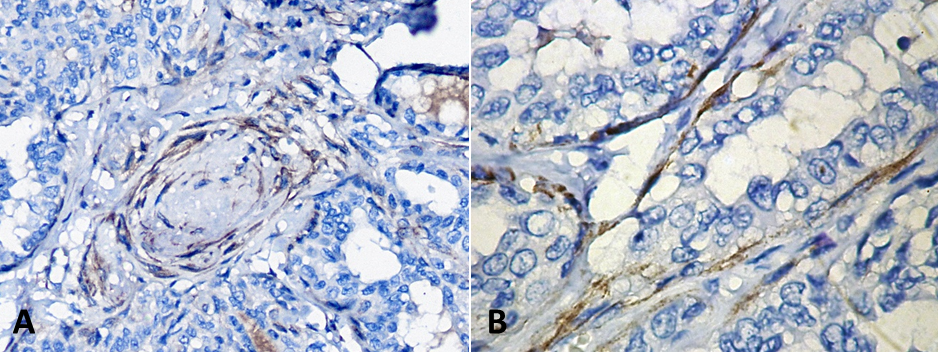
The most significant interest in veterinary oncology is occupied by tumors of a mixed nature, which are represented by the direct interaction of epithelial and mesenchymal components. According to some data, the formation of cell lineage of mesenchymal cells occurs due to the transformation of epidermal basket cells surrounding the glandular epithelium. In this case, the formation of a cartilage anlage with its further transformation into differentiated bone tissue occurs. The article contains information about the structure and features of the location and interaction of mixed tumors’ glandular and stromal components in female dogs (n=29). It was revealed that in addition to simple mixed neoplasms, tumors with proplasia of the mesenchymal component into highly differentiated cartilage or bone tissue were also often registered. To confirm subcellular changes in the expression of certain types of proteins, such as a-SMA and vimentin, an IHC study was used. The expression of the studied biomarkers was established in mesenchymal fibroblastic differon cells and myoepithelial cells. The intensity of immunoreactive material expression ranged from moderate (2+) to strong (3+), indicating changes in myoepithelial cells’ genotype during the formation of mixed mammary neoplasms.