
Granulomatous posthitis caused by Halicephalobus gingivalis in association with penile squamous cell carcinoma in an equine: clinical and anatomopathological aspects
DOI:
https://doi.org/10.24070/bjvp.1983-0246.019021Keywords:
Nematode, diagnosis, pathology, zoonosesAbstract
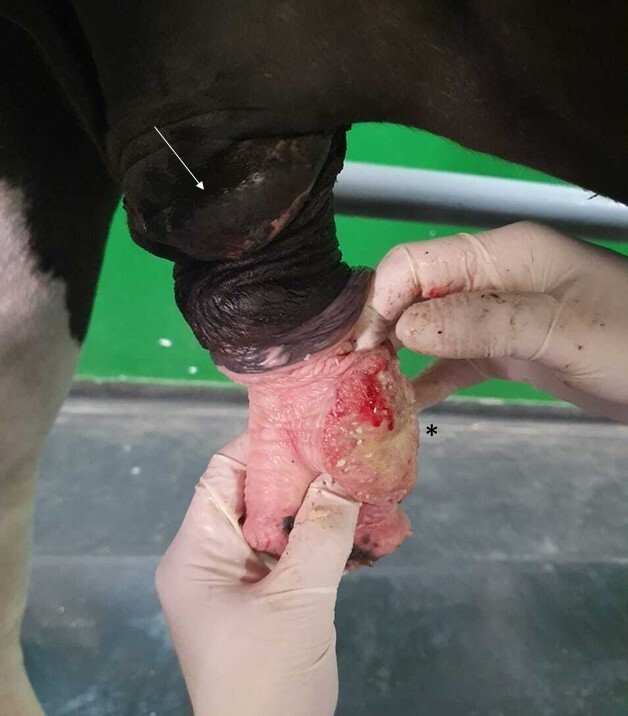
Penile and preputial squamous cell carcinomas are among the most common tumors in horses, and inflammation of the external genitalia caused by Halicephalobus gingivalis is an important differential diagnosis. H. gingivalis is a free-living nematode that causes fatal parasitic encephalitis in horses and humans and can eventually be diagnosed in the kidneys, lymph nodes, lungs, genital and ocular mucosa. The objective was to characterize clinical and pathological lesions caused by H. gingivalis infection in the prepuce with concomitant involvement of penile squamous cell carcinoma in an equine. A 15-year-old male Pampa horse with prepuce and penis ulcerated lesions had these surgically excised. Histopathological analysis revealed granulomatous posthitis with H. gingivalis intralesional and ulcerated penile squamous cell carcinoma. The animal had a satisfactory clinical and surgical evolution, and there was no recurrence of the lesions after a six-month follow-up period. Considerations regarding the route of infection, treatment, and zoonotic potential were highlighted, showing the importance of including this pathogen in the differential diagnosis of nodular lesions affecting the preputial and penile areas in horses.
Downloads
Published
Issue
Section
License
Copyright (c) 2026 Brazilian Journal of Veterinary Pathology

This work is licensed under a Creative Commons Attribution 4.0 International License.


