
Wildfire-related lesions in a free-ranging Paraguayan Hairy Dwarf Porcupine (Coendou spinosus) in Brazil
DOI:
https://doi.org/10.24070/bjvp.1983-0246.019007Keywords:
burns, conservation, pathology, intensive careAbstract
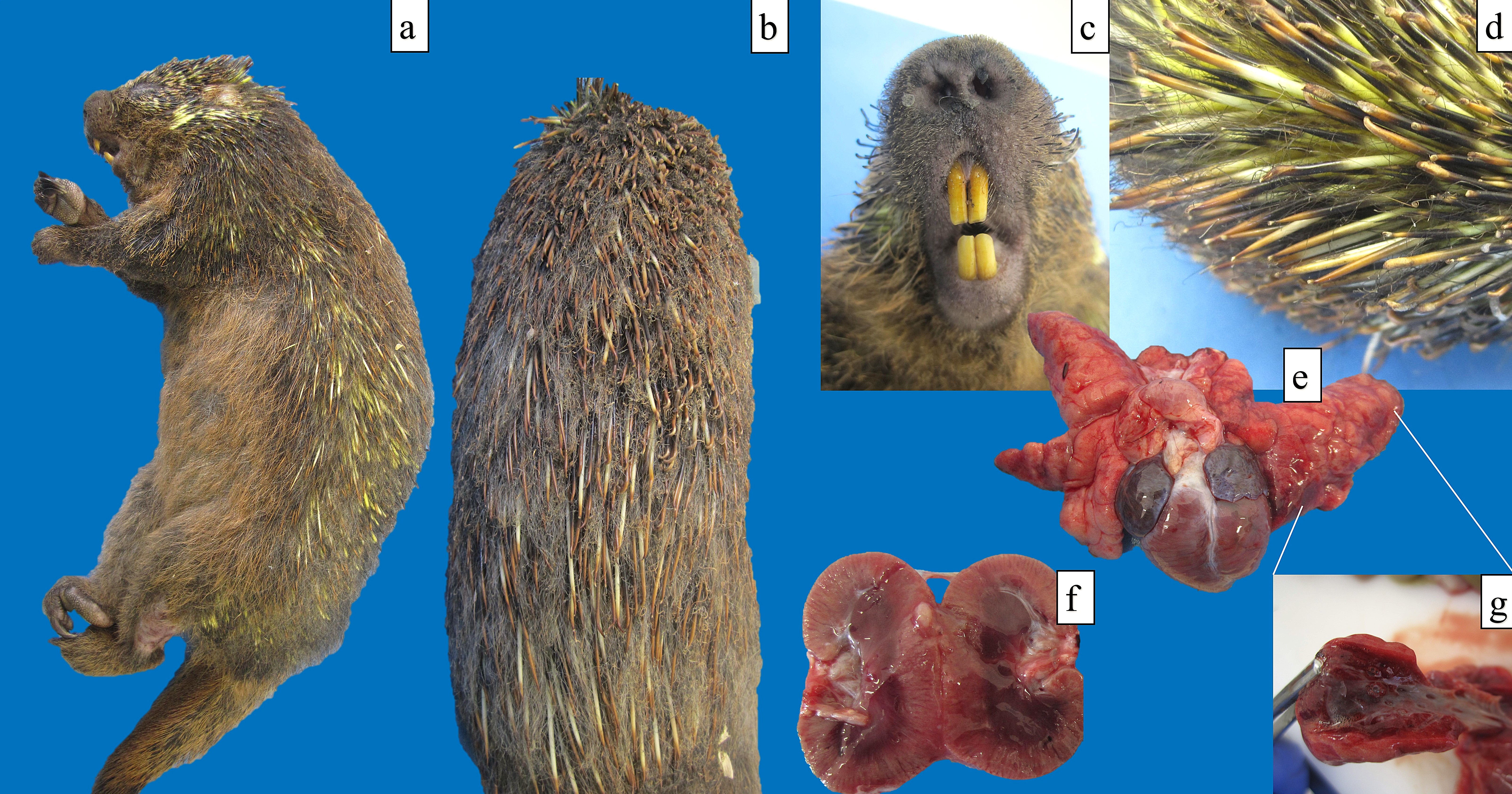
The impacts of wildfire smoke on the health and behavior of wildlife are largely unknown and a few studies have explicitly considered the impact of wildfire smoke inhalation on the health of wildlife. Veterinarians should be aware of how animals behave during forest fires and the lesions are most common in different groups of animals. We describe here the injuries found in a porcupine that was a victim of wildfire, in a State Park, after a balloon crash. Despite the care provided, the animal died. At necropsy, it showed singed fur, erythema on the skin, swollen lungs, and congestion in the kidney. Microscopic examination revealed pulmonary edema, carbon pigmentation in the alveoli, liver degeneration, acute tubular injury in the kidney, and cardiac hemorrhage. The cardiorespiratory lesions were the most significant finding and were associated with the cause of death. These findings are a warning sign, since rescue veterinarians are often concerned primarily with providing support for burns visible on physical examination, neglecting cardiorespiratory function and metabolic changes that may be present. Necropsy of an animal killed by a forest fire should always be encouraged, as it can help clarify the events that occurred, allows comparative pathology and develop intensive care protocols, reducing the loss of life.
Downloads
Published
Issue
Section
License
Copyright (c) 2026 Brazilian Journal of Veterinary Pathology

This work is licensed under a Creative Commons Attribution 4.0 International License.


