
PRAME immunoexpression in canine melanocytic tumors: a case series study
DOI:
https://doi.org/10.24070/bjvp.1983-0246.019018Keywords:
dogs, melanoma, diagnosis, immunohistochemistryAbstract
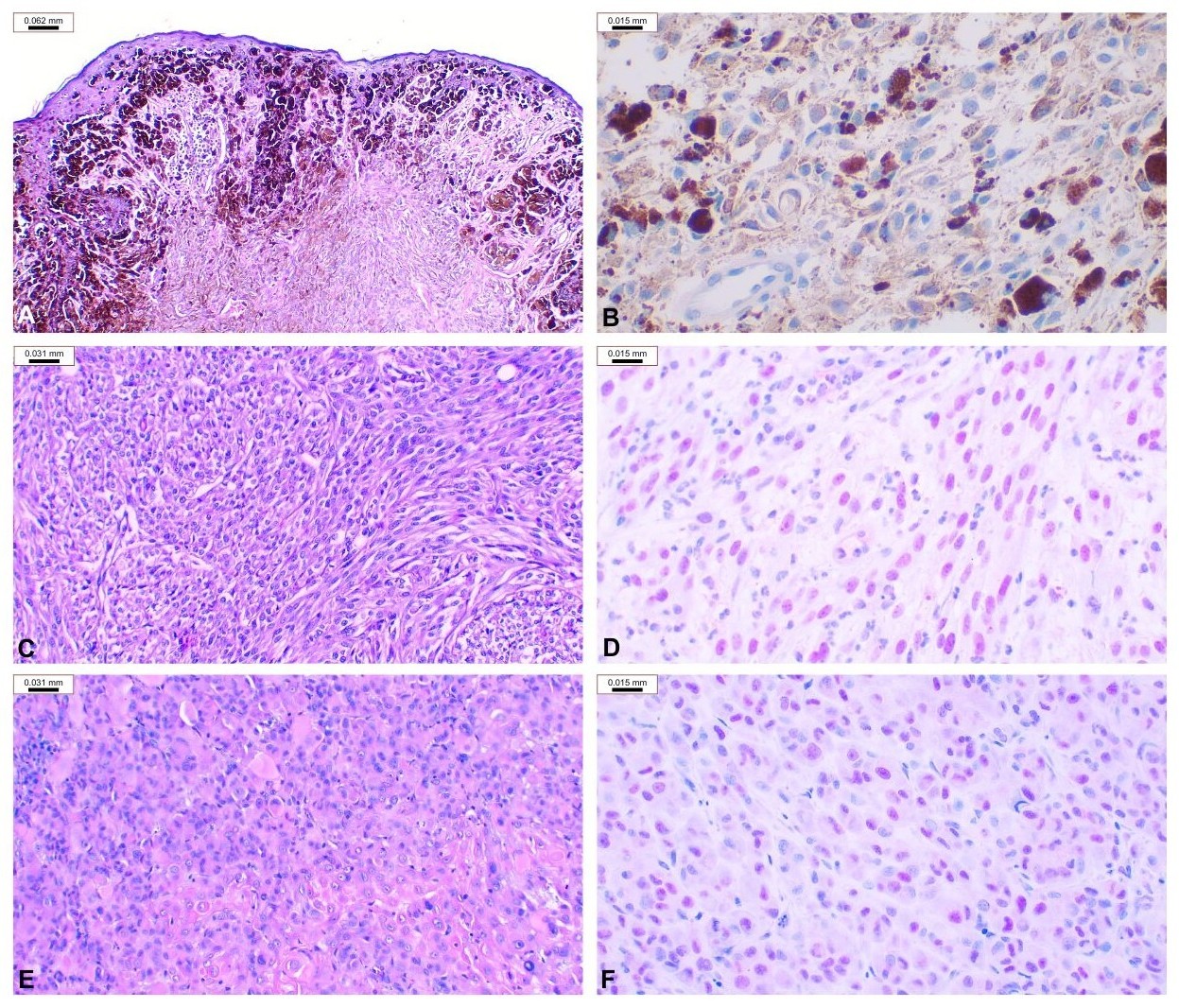
Diffuse immunoexpression of Preferentially Expressed Antigen in Melanoma (PRAME) is an ancillary diagnostic tool for distinguishing human melanoma from melanocytic nevi. Canine melanocytic neoplasms are common in veterinary diagnostic practice; however, no established immunohistochemical biomarkers of malignancy are currently available. This case series study aimed to investigate the immunoexpression of the anti-PRAME (EPR20330) antibody in canine melanocytic tumors. Two cutaneous melanocytomas and six melanomas from distinct anatomical sites (haired skin, oral cavity and feet) were submitted to immunohistochemistry protocol with anti-PRAME antibody (clone EPR20330, dilution 1:100, Abcam) overnight at 4°C. Nuclear immunolabeling was scored on a 5-point scale based on the percentage of positive tumor cells (0: none; 1: 1–25%; 2: 26–50%; 3: 51–75%; 4/diffuse: ≥76%). The two evaluated melanocytomas were PRAME-negative. All melanomas were PRAME-positive and diffuse nuclear immunolabeling was observed in 4/6 cases. To the best of our knowledge, this is the first study to demonstrate the immunohistochemical expression of the anti-PRAME antibody (clone EPR20330) in canine melanomas. Our preliminary findings, based on a limited sample size, suggest that PRAME may represent a promising ancillary diagnostic marker for these tumors, similar to its use in human samples. However, further studies with larger cohorts are needed to better characterize its labeling patterns in canine melanocytic neoplasms and to confirm its diagnostic value in veterinary pathology.
Downloads
Published
Issue
Section
License
Copyright (c) 2026 Brazilian Journal of Veterinary Pathology

This work is licensed under a Creative Commons Attribution 4.0 International License.


